Need a little more direction?
Watch our tutorial


2 hr 0 min
2 hr 0 min

0 from 0 reviews

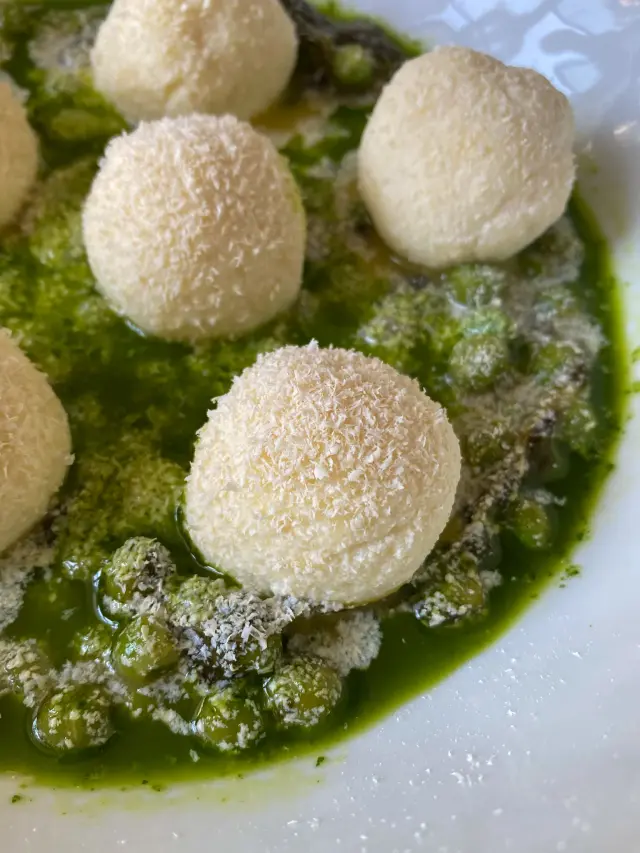
Spring is the season of fresh greens and light, delicate dishes. This recipe for ricotta dumplings with a pea, sorrel, butter sauce perfectly captures the flavors of the season, combining the creaminess of ricotta with the fresh, tangy taste of sorrel and sweet, tender peas. The dish is easy to make and can be served as a main course or a side dish, making it a versatile addition to any spring menu. You can either make the ricotta from scratch (recipe is attached here below) or use a store-bought. Either way, give this recipe a try and enjoy the flavors of the season in every bite!
Small pot
Bowls
Food processor
Sieve
Cheesecloth or towel
Grater
Pan
Pot
Container
Sieve
Cheese cloth
Thermometer

Ricotta dumplings
Starting with making the basil oil, blanch the basil for 30 seconds.
Transfer to iced water to stop the cooking. Leave in the iced water for 2-3 minutes.
Drain and squeeze any excess liquid from the leaves.
In a food processor/blender, combine the blanched basil, olive oil, and salt. Blend until homogeneous.
Pass through a fine sieve a couple of times. Store in a closed bottle; better to keep it in the fridge.
Moving to the dumplings- in a cheesecloth, add the ricotta and press it down (using a weight, can be anything heavy) to get rid of any excess liquid. You want the ricotta to be as dry as you can. The pressing process should take at least 30 minutes.
In a bowl, add the drained ricotta, Parmigiano Reggiano, salt, egg, and egg yolk. Mix well until combined.
Add the flour and mix until combined.
Using your hands, form balls from the ricotta mix to your desired size. I shape them to bea little smaller than a ping pong ball. Set aside.
Boil water in a pot for the dumplings while preparing the sauce in a separate pan.
Set on medium heat, add to a pan the water and butter. Let the butter melt and emulsify with the water, mixing with a spatula constantly.
Add the peas and the sorrel leaves.
At this point, the sauce is ready. If you see the butter separate from the water, add a sip of water.
Boil the ricotta balls until they float to the top.
Plate- add the sauce to the bowl, add the ricotta balls on top, grate some yogurt stone on top, and drizzle basil oil on top.
YASSS!
Homemade Ricotta
Pour all the milk into a pot. Stir in the salt.
Bring to a simmer (194°F or 90°C) over medium heat, stirring occasionally.
Once it gets to simmer, add the lemon juice and turn off the heat.
Mix for a few seconds with a whisk and cover with a lid.
After 10 minutes, break the curd that has formed.
Place a bowl and a sieve on top. Cover the sieve with cheesecloth.
Pour the mixture into the cheesecloth and allow it to drain into the bowl at room temperature.
The longer you let the mixture drain, the thicker the ricotta will get.
After the mixture is drained, you can enjoy it immediately with a spoon; you can fill up some fresh pasta or let it sit overnight to form a cheese form. I love to put it in a tiny cheese mold to let it sit overnight in the fridge.
Enjoy it on a fresh sourdough toast.
YASSS!
Watch our tutorial


write your comment